Author: Only AI Stuff

Categories

TikTok Scholars Unveil ‘Depth Anything’: A Versatile Approach to Effective Single-Lens Depth Calculation

Foundational models, which are vast deep-learning neural networks used as a platform for developing effective machine learning models, are essential in the field of natural language processing and computer vision. They also play a crucial role in Monocular Depth Estimation (MDE) – a process of estimating depth from one image, widely used in autonomous vehicles,


Read More »

Top 20 ChatGPT Suggestions for Writing a Book

Writing a book can be a daunting task, but with the help of AI technologies like ChatGPT by OpenAI, the process has become more manageable and dynamic. ChatGPT, an AI-driven language model, assists in answering inquiries, writing emails, articles, code, providing writing ideas and feedback. The model appeals to a vast user base, including many

Read More »

Upgrade of Bard’s Gemini Pro persists, gains image generation

Google has expanded its AI chatbot, Bard, powered by Gemini Pro, to support over 40 languages in more than 230 countries. The free chatbot allows users to create images in English in most countries. With Gemini Pro enhancing Bard’s understanding, reasoning, and coding abilities, the competition between top AI chatbots is tightening. Although Gemini Pro

Read More »

This Article Exposes the Unexpected Impact of Non-pertinent Data on the Precision of Retrieval-Augmented Generation RAG Systems and Future Paths in AI Information Extraction

Retrieval-Augmented Generation (RAG) systems, a critical tool in advanced machine learning, have transformed the understanding of large language models (LLMs) by delivering enhanced interactions with external data. This approach tackles the limitations traditionally encountered by LLMs, such as their confinement to pre-trained information and a limited contextual window. A crux in the application of RAG

Read More »

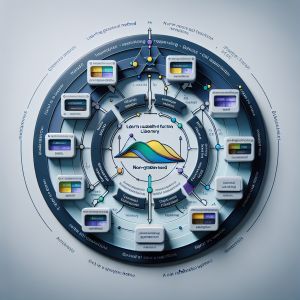
UNC-Chapel Hill’s AI Study Introduces ReGAL: A Method Using No Gradients for Learning a Reusable Functions Library through Code Refactoring

Abstraction in software development is essential for streamlining processes, simplifying tasks, increasing code readability and fostering code reuse. Typically, Large Language Models (LLMs) have been used to synthesize programs, but these need to be optimized for maximum efficiency as their current application often overlooks the efficiencies that could be achieved through applying common patterns. The

Read More »

StrokeNUWA Unveiled by Microsoft Scientists: The Tokenization of Strokes for Vector Graphic Generation

Researchers from Soochow University, Microsoft Research Asia, and Microsoft Azure AI have developed a new method for image processing using Large transformer-based Language Models (LLMs). LLMs have been making advancements in Natural Language Processing and other fields like robotics, audio, and medicine. They are also being used to generate visual data, with modules like VQ-VAE

Read More »

Introducing RAGatouille: A User-Friendly Machine Learning Library for Training and Implementing a SOTA Retrieval Model, ColBERT, with Minimal Coding

Creating efficient Retrieval-Augmented Generation (RAG) pipelines can be tricky due to the integral components that demand careful selection of models. While open-source embeddings like OpenAI’s text-ada-002 provide decent starting points, they may not always be suitable for all cases. Hence, the field of information retrieval must explore other potential solutions. There has been remarkable progress

Read More »

This Joint Apple and CMU AI Document Presents WRAP: A Revolutionary Approach to Pre-training Linguistic Models using Fabricated Data

Large Language Models (LLMs) are gaining popularity in the AI community due to their impressive capabilities such as text summarization, question answering and content generation. However, the training of LLMs often involves significant computational cost and time, and is typically reliant on unstructured and often unclear web-scraped data. Additionally, the scarcity of high-quality data on

Read More »

Researchers at Alibaba Present Mobile-Agent: A Self-governing Multi-Modal Mobile Device Agent

Mobile device agents employing Multimodal Large Language Models (MLLM) are becoming more popular due to impressive advancements in visual comprehension capabilities. This technological progression makes MLLM-based agents suitable for a variety of applications, including mobile device operation. Previously, Large Language Model (LLM)-based agents have been recognized for their task planning capabilities. However, issues in the

Read More »

AIWaves Launches Weaver: A Set of LLMs Designed for Writing Tasks

AIWaves Inc. has introduced a novel Family of Large Language Models (LLMs) called Weaver, specifically designed for creative and professional writing. These models, primarily built on Transformer architectures, have significantly contributed to AI’s capabilities in understanding and generating human language. However, enhancing LLMs for creative writing, especially for nuanced contexts such as fiction or social

Read More »

Researchers from Google DeepMind Reveal Novel Meta-Learning Strategy: Utilizing Universal Turing Machine Data for Enhanced Neural Network Training

Meta-learning, considered a blooming field in AI research, aims at making neural networks quickly adjust to new tasks with minimal data. The focus here is to expose neural networks to an array of different tasks, enabling them to form versatile, problem-solving representations. The goal is to cultivate broad abilities in AI systems, inching closer to

Read More »

Scientists at the University of Washington Develop a Protein Sequence Design Using Deep Learning that Thoroughly Incorporates the Complete Non-Protein Atomic Context

Researchers at the University of Washington have developed a novel technique using deep learning to improve protein sequence design, particularly focusing on enzymes and the design of small molecule binder and sensors. The method, known as LigandMPNN, has been designed to address certain shortcomings in existing methods like Rosetta and ProteinMPNN, which struggle to model

Read More »