
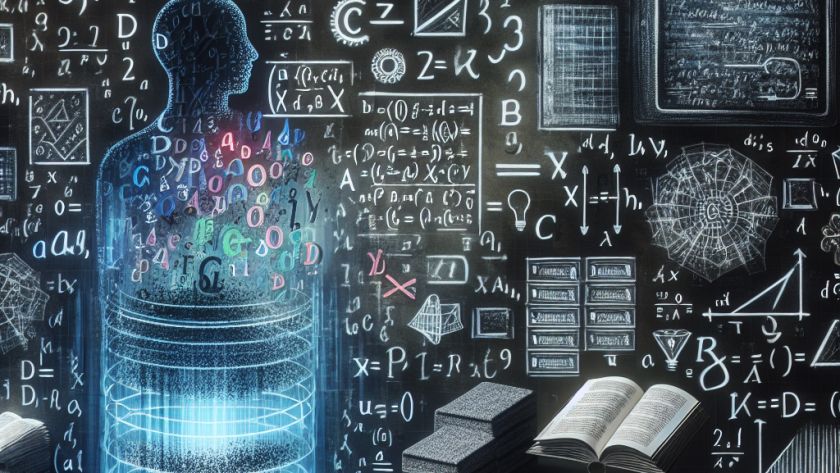

A ground-breaking method to give animators more control over their work has been introduced by researchers at the Massachusetts Institute of Technology, represented in a paper by Ana Dodik, the lead author. The technique relies on generating mathematical functions known as 'barycentric coordinates,' which guide how 2D and 3D shapes bend, stretch, and move throughout…
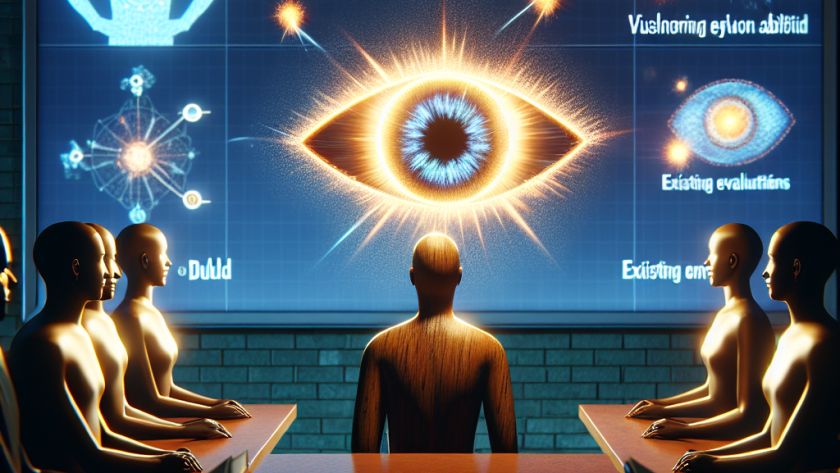
Researchers from the University of Pennsylvania, University of Washington, Allen Institute for AI, University of California, and Columbia University have developed a novel benchmark study for evaluating core visual perception abilities in multimodal large language models (LLMs), called 'Blink.' The study suggests that current methods of evaluating LLMs conflate perception with linguistic understanding and reasoning.…
Researchers at MIT have developed a technique to give animators greater control over the movements of their 2D and 3D characters. Their method generates barycentric coordinates, mathematical functions that dictate how shapes bend, stretch, and move through space. Unlike other methods, this approach offers flexibility by allowing animators to choose suitable functions for achieving desired…

Researchers at MIT have introduced a new technique for artists that could revolutionise the way animated characters are brought to life in movies and games. The technique is based on barycentric coordinates, a mathematical function that defines how 2D and 3D shapes can move and bend. This is a significant advance on existing techniques which…
MIT researchers have developed a new method to improve the control animators have over their animated characters. The technique involves the use of a mathematical function called Barycentric coordinates, that defines how both 2D and 3D elements can be manipulated in space. Unlike other techniques, this allows for more flexibility and leeway for creatives.
An important…