Skip to content Skip to sidebar Skip to footer

Computer vision

A versatile approach to assist animators in enhancing their craft.

Researchers at MIT have developed a technique which provides an updated approach to creating animations and could deliver more control to artists. The technique uses mathematical functions known as barycentric coordinates, which dictate how 2D and 3D shapes interact with space, introducing possibilities for curvature and movement. Current techniques tend to offer limited flexibility, generally…

Read More

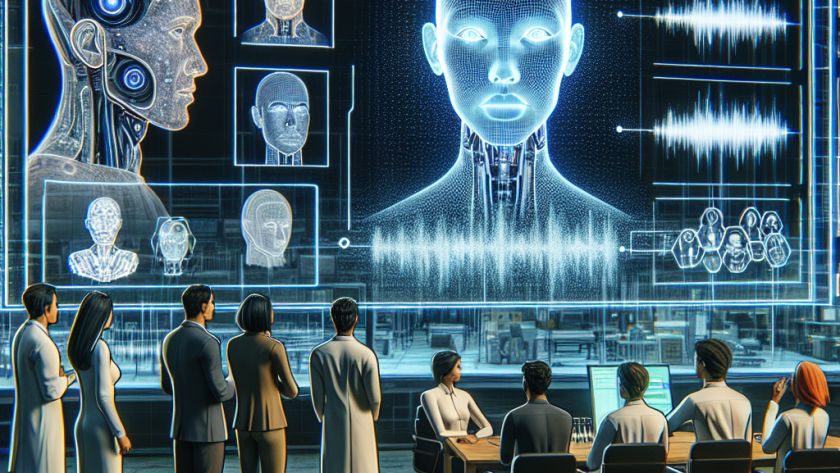
Microsoft researchers unveil VASA-1, a new breakthrough in generating realistic talking faces using audio-driven innovation.

The human face serves an integral role in communication, a feature that is not lost on the field of Artificial Intelligence (AI). As AI technology advances, it is now creating talking faces that mimic human emotions and expressions. Particularly useful in the area of communication, the technology offers numerous benefits, including enhanced digital communication, higher…

Read More

A versatile approach to assist animators in enhancing their animation work.

A team of researchers from MIT has introduced a new technique that allows artists of animated movies and video games to have greater control over the movement of their animations. Their method is rooted in mathematical functions called barycentric coordinates, which define how 2D and 3D shapes move, bend and stretch. This level of dynamic…

Read More

A versatile approach to assist animators in enhancing their artistry.

Researchers from MIT have developed a new technique that could offer artists greater control over animations. This new method utilizes barycentric coordinates, mathematical functions that dictate how 2D and 3D shapes can bend, stretch and move. Significantly, this technique gives animators the flexibility to define their preferred 'smoothness energies' that best suits their artistic vision. Presently,…

Read More

Scientists from University of North Carolina at Chapel Hill have launched CTRL-Adapter, an adaptable and efficient AI structure capable of adjusting various controls to any diffusion model.

Digital media has ushered in the requirement for precision in the generation and control of images and videos. This need led to the development of systems like ControlNets, which allow explicit manipulation of visual content using various conditions such as depth maps, canny edges, and human poses. Nonetheless, integration of these technologies with new models…

Read More

An adaptable approach to assist artists in enhancing animation.

Researchers at MIT have developed a new method that allows animators to have more control over their creations. Using mathematical functions called barycentric coordinates, they can now better control how 2D and 3D shapes stretch, move, and bend. Unlike traditional methods that only offered limited options for animation, this new method provides animators a level…

Read More

An adaptable approach that assists artists in enhancing animation.

A new technique introduced by MIT researchers promises artists greater control over the animations of heroes and villains in animated movies and video games. The method generates barycentric coordinates - mathematical functions that define how 2D and 3D shapes can move, bend, and stretch in space. This allows an artist to shape the motion of…

Read More

A versatile approach designed to assist illustrators in enhancing their animation.

Researchers at MIT have developed a technique that could allow animators to have greater control over their characters. The method uses mathematical functions known as barycentric coordinates, which define how 2D and 3D shapes can bend, stretch, and move through space. This technique could provide artists with more flexibility in their animations, unlike previous techniques…

Read More