AI organization Together AI has made a significant step in AI by introducing a Mixture of Agents (MoA) approach, Together MoA, which integrates the strengths of multiple large language models (LLMs) to boost quality and performance, setting new AI benchmarks.
MoA uses a layered design, with each level having several LLM agents. These agents use the…
Code intelligence, which uses natural language processing and software engineering to understand and generate programming code, is an emerging area in the technology sector. While tools like StarCoder, CodeLlama, and DeepSeek-Coder are open-source examples of this technology, they often struggle to match the performance of closed-source tools such as GPT4-Turbo, Claude 3 Opus, and Gemini…
Microsoft Research has recently unveiled AutoGen Studio, a groundbreaking low-code interface meant to revolutionize the creation, testing, and implementation of multi-agent AI workflows. This tool, an offshoot of the successful AutoGen framework, aspires to democratize complex AI solution development by minimizing coding expertise requirements and fostering an intuitive, user-friendly environment.
AutoGen, initially introduced in September…
In June 2024, AI organization Databricks made three major announcements, capturing attention in the data science and engineering sectors. The company introduced advancements set to streamline user experience, improve data management, and facilitate data engineering workflows.
The first significant development is the new generation of Databricks Notebooks. With its focus on data-focused authoring, the Notebook…
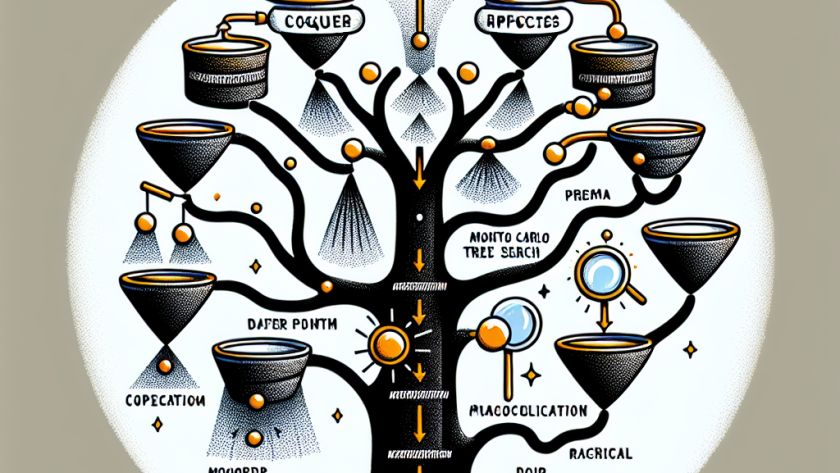
Artificial intelligence (AI) with large language models (LLMs) have made major strides in several sophisticated applications, yet struggle with tasks that require complex, multi-step reasoning such as solving mathematical problems. Improving their reasoning abilities is vital for improving their efficiency on such tasks. LLMs often fail when dealing with tasks requiring logical steps and intermediate-step…