Skip to content Skip to sidebar Skip to footer

MIT-IBM Watson AI Lab

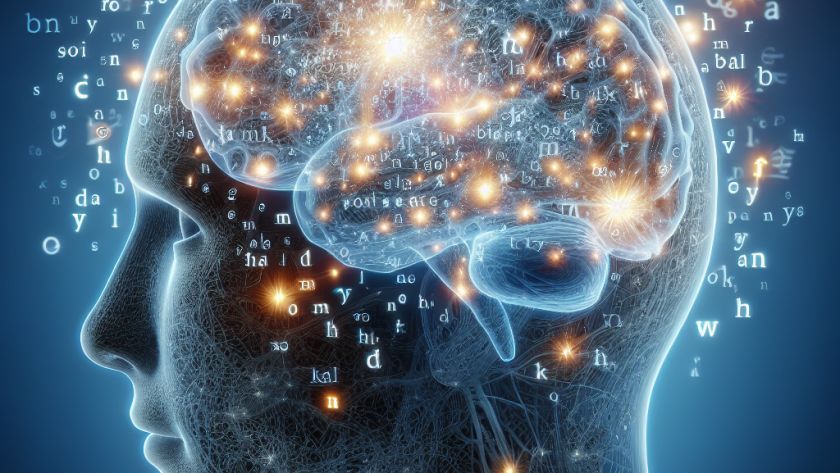
Complicated and unfamiliar phrases put more strain on the brain’s language processing system.

A recent study from MIT has uncovered that the human brain's principal language processing centers are most activated while reading complex, unusual sentences. The artificial language network assisted study revealed that the more intricate a sentence was, either through unconventional grammar or unexpected meaning, the more these language processing centers were activated. In contrast, simple…

Read More

The language network in the brain is taxed more heavily by complicated sentences that aren’t easily recognized.

MIT researchers have used an artificial language network to decipher which types of sentences activate the brain's language processing centers most effectively. Their study reveals that sentences of higher complexity with unusual grammar or unexpected meanings engage these centers to a greater degree than straightforward sentences or nonsensical series of words. Their findings are based…

Read More

This small chip can protect user information while promoting effective computation on a mobile phone.

Researchers from MIT and the MIT-IBM Watson AI Lab have developed a machine-learning accelerator that is resistant to the two most common types of cyber attacks. This development is a major leap forward in data and information security within devices using machine-learning applications. The chip can protect sensitive user information such as health records and…

Read More

A versatile approach to assist creators in enhancing animation.

Researchers at MIT have developed a technique to give animators greater control over the movements of their 2D and 3D characters. Their method generates barycentric coordinates, mathematical functions that dictate how shapes bend, stretch, and move through space. Unlike other methods, this approach offers flexibility by allowing animators to choose suitable functions for achieving desired…

Read More

An adaptable approach to assist animators in enhancing their artistry.

Researchers at MIT have introduced a new technique for artists that could revolutionise the way animated characters are brought to life in movies and games. The technique is based on barycentric coordinates, a mathematical function that defines how 2D and 3D shapes can move and bend. This is a significant advance on existing techniques which…

Read More

An adaptable approach to assist artists in enhancing animation.

MIT researchers have developed a new method to improve the control animators have over their animated characters. The technique involves the use of a mathematical function called Barycentric coordinates, that defines how both 2D and 3D elements can be manipulated in space. Unlike other techniques, this allows for more flexibility and leeway for creatives. An important…

Read More

A versatile approach to assist animators in enhancing their craft.

Researchers at MIT have developed a technique which provides an updated approach to creating animations and could deliver more control to artists. The technique uses mathematical functions known as barycentric coordinates, which dictate how 2D and 3D shapes interact with space, introducing possibilities for curvature and movement. Current techniques tend to offer limited flexibility, generally…

Read More

A versatile approach to assist animators in enhancing their animation work.

A team of researchers from MIT has introduced a new technique that allows artists of animated movies and video games to have greater control over the movement of their animations. Their method is rooted in mathematical functions called barycentric coordinates, which define how 2D and 3D shapes move, bend and stretch. This level of dynamic…

Read More