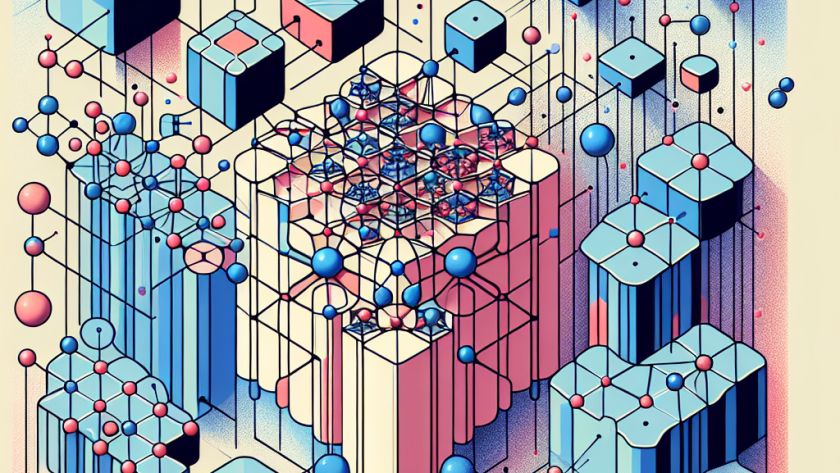
A ground-breaking method to give animators more control over their work has been introduced by researchers at the Massachusetts Institute of Technology, represented in a paper by Ana Dodik, the lead author. The technique relies on generating mathematical functions known as 'barycentric coordinates,' which guide how 2D and 3D shapes bend, stretch, and move throughout…
Using an artificial language network, neuroscientists from MIT have identified the type of sentences that most effectively activate the human brain's language processing centres. Their findings, published in Nature Human Behavior, show that the most stimulating sentences are those which are complex due to uncommon words or grammar, or unexpected meanings. Simplistic sentences or nonsensical…
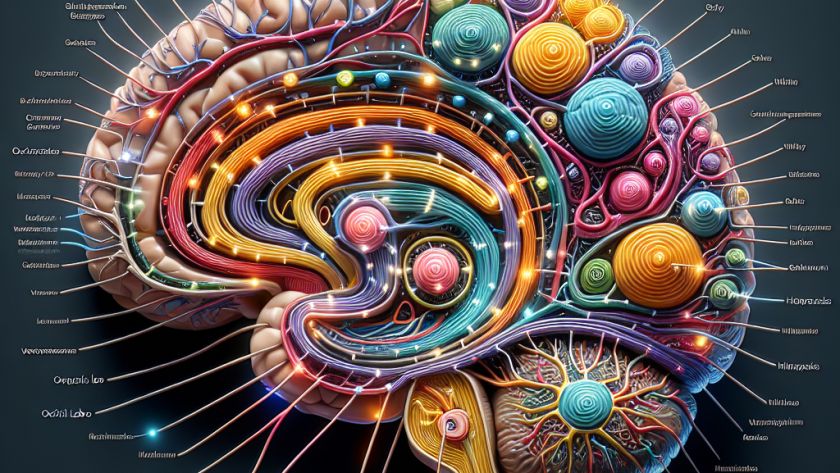
For almost ten years, researchers from MIT’s Computer Science and Artificial Intelligence Laboratory (CSAIL) have conducted studies to understand why some images are more memorable than others. The team used magnetoencephalography (MEG), which records timing of brain activity, and functional magnetic resonance imaging (fMRI), which identifies active brain regions, to discern when and where in…
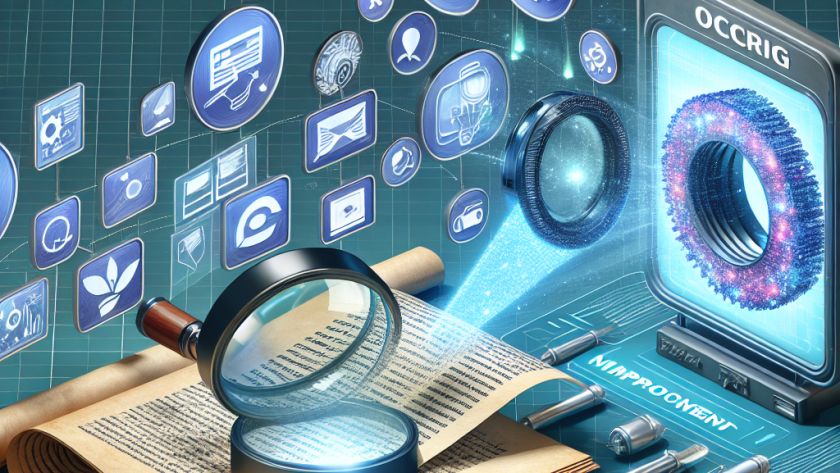
OCR, or Optical Character Recognition, is a technology that can convert images of text into a format that is machine-readable. This technology is being largely adopted in various sectors, including health, where it is used to process various medical records. The application of OCR, however, isn't limited to just healthcare and can be effectively leveraged…
Researchers from the University of Pennsylvania, University of Washington, Allen Institute for AI, University of California, and Columbia University have developed a novel benchmark study for evaluating core visual perception abilities in multimodal large language models (LLMs), called 'Blink.' The study suggests that current methods of evaluating LLMs conflate perception with linguistic understanding and reasoning.…
Generative models are key tools in various sectors, such as computer vision and natural language processing, due to their ability to generate samples from learning data distributions. Among these, Diffusion Models (DMs) and particularly Latent Diffusion Models (LDMs) are favored for their high-quality image output, speed of generation, and reduced computational cost. Despite these advantages,…